Tuesday, 20 August 2013

Elastic Shoelaces? Man still not in Álora

Elastic Shoelaces? Man still not in Álora


Less than a fortnight to go before we head back to El Valle del Sol. Only four more days at FareShare too. Not much time left to save the world from waste.


"Just bin down to that London. It were all reet but nowt special."


One of the pleasures of spending time in The British Isles is taking advantage of the innumerable cultural activities on offer. No need to travel to the capital city either. Manchester City Art Gallery was a bit depleted but worth visiting just for its Pre- Raphaelites and Birmingham's Sarehole Mill and  Museum of the Jewellery Quarter are little gems.  Kiftsgate  Court Gardens were a first for us; nice gardens, poor food.

Last Saturday we went to the  Lowry exhibition at  Tate Britain.

Laurence Stephen Lowry came from the North of England. The south never got what he was doing and still doesn't.

'Even when a post-war Labour government had eradicated many of these things, Lowry, a Lancashire Tory, continued to see the poor as unevolved, their by now anachronistic sufferings too useful a subject to sacrifice to mere truth-to-life. Its subtle palette apart, I find his work repellent. As to the people who buy it, well ….'

Charles Darwent. The Independent, 29/6/2013

This is the first exhibition of his work in a public London gallery since his death in 1976. Lowry turned down five 'honours' including a knighthood. He described himself as 'a Manchester man'.
 His figures are not 'matchsticks' and, as far as I know, he didn't paint on 'cardboard boxes from the shops' either. The exhibition at the Tate Britain concentrates, not surprisingly, on his urban scenes and industrial landscapes. Two thirds are on loan from private owners, including most those loaned by The Lowry in Salford. Why don't many public galleries own Lowry paintings? There's one ('The Procession') from 'Gallery Oldham' which used to be called  'The Oldham Art Gallery' for some reason.


                                      Self Portrait 1957

Today we went to the Birmingham Energy Recovery Facility at Tyseley. I always thought it was called 'the tip'. It's where we take things we can't get in the bins.

 
Tyseley Energy Recovery Facility

 Mrs. Sánchez arranged the guided visit and it was litterally mindblowing. Eleven of us were greeted by the top man, Steve, who issued us with tea and biscuits , hard hats, safety specs and high vis. jackets. The TERF is just a big incinerator that generates 25-30 megawatts of electricity (enough to power 40,000 homes). It's better than using landfill and burns everything that is put in dustbins including glass and metal (at 950 degrees C) and doesn't produce any nasty gases or smells. Steve says that it will only take 3 people to run the latest plants. Good news for Veolia the French company making the profits; bad news for the workers they won't need. (the pay is rubbish anyway).

 
Take my tip. Take a trip to the tip

 
                                     In the Turbine Room. It's dark in here.


One I made earlier


Yesterday I bought some shoelaces at Timpson's in Kings Heath. When I got them home I found they were elastic. What's the point of elastic shoelaces, chocolate teapots, glass hammers, paper umbrellas, inflatable dartboards etc. ?


August 20th. 2013

Thursday, 1 August 2013

Three lemons left.


Three Lemons Left. Time to think about heading back to Alora. My supply of  wine is going down fast too. (pause for a glug). One black pudding to go, a bag of olives and that's about it. One of those lemons looks a bit ropey too. 30p+ in the shops here!

The old Español has slipped too. I went to a 'meetup' of Spanish/English speakers in Birmingham on Sunday but no-one spoke to me so I went home. Ignorant bastards. They all appeared to be under 20 and on the pull. I was invisible. I'm trying to keep up my Spanish by Reading Spanish books (book). Also I'm watching re-runs of a Spanish soap called 'Cuéntame Como Pasó' set in the late 60s. It's really good and the daughter's a stunner. She bought a bikini in the last episode.

http://www.rtve.es/television/cuentame/temporada-1/

El retorno del Fugitivo

Have a look if you fancy brushing up your Spanish. She's third from the left.

What a fantastic summer!! 3 weeks of sun and heat. We got it right this time.

I found out that I've been driving in England illegally for the last ten years. Apparently driving a car with foreign plates in the UK is illegal if you are a UK resident. Who'd a thought? I was assured by a very nice lady in Coin that I could get away with it as 'the pólice here probably don't know.' I imagined myself explaining this to a post graduate UK traffic bobby and decided to CHANGE CARS. I also have doubts about my Gibralter issued  insurance cover whilst I'm here although my insurance agent (also in Coin coincidentally) assures me that even though it says máximum 3 month's travel outside Spain 'they won't know when you arrived.' In the process of checking all this I found out that Mrs. Sánchez has been driving uninsured for nearly three years. ( I trust that GCHQ  will not pass these facts on to anyone who matters). What a legal nightmare!

Meanwhile I am being pestered by young people, some well spoken and possibly from good families, who call  me several times daily to suggest that I should claim for injuries I didn't sustain last June while I was sitting in my living room and a car bumped into mine outside on the road.


Do you know anyone else who wants to drive a UK registered car in Spain for 6 months in a year? If you do, ask them where they get their insurance from. (whence they obtain insurance cover, Paddy). It's nigh on imposible. Bleeding meercats, bulldogs, Babushka admirals,  It took me four weeks to find some cover and 3 days to buy a new car.

Not from this lot.

AVIVA came up trumps. I think.

Thanks.


Meanwhile....NEWS FROM ÁLORA

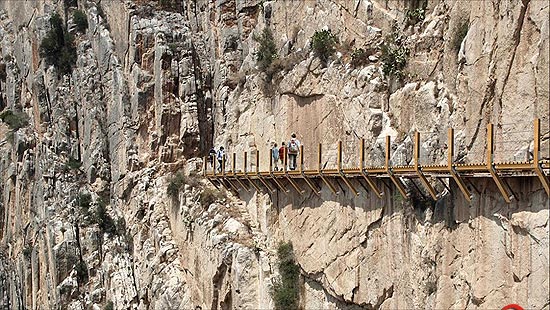
These pictures  of the Caminito del Rey (see blog 1/1/2013) appeared on the Álora website. The news is that work is about to start on the refurbishment of the pathway. This news appears regularly. The pictures are 'artist's impressions.


Can't wait.

1/8/2013

Sunday, 23 June 2013

Man not in Álora for a bit

Man not in Alora for a bit.  


All this stuff 
 
A carpet, two suitcases, two folding bikes,  a soft bag, a sack of lemons, 37 bottles of wine,  a cool box full of mostly pork products, a laptop, a dog in a cage, his food and water, a rucksack, a big bag of shoes, a box full of something, another box of ? clothes, a camera tripod, a big kitbag full of clothes, cheese, a picnic rucksack and 55 litres of extra virgin olive oil and Mrs.Sanchez (standing).
 
fitted into this

 
plus driver 
 
Back in Brum.
 
The Málaga area  really does have a different climate from the rest of Spain. It shares its weather with northern Africa. We've had hot and sunny weather for weeks now. There is always an interim period where we change from opening the windows to let in the warm air to warm the house, to shutting the windows and shutters to keep the warm air out. Anyway, we set off in shorts and T shirts etc., drove for 6 hours towards Madrid and then we noticed it had gone cold. Then the driving rain started.A couple of hours later the receptionist at the Hotel Palacio Valderabanas in Ávila clocked our tropical garb and gave us a knowing look.
 (Ávila is the highest provincial  capital in Spain (1132 metres/3714 ft. above sea level/very high up.). Buxton, the highest market town in England is a mere 1000ft. above sea level.)
 
 
                                                                  Ávila.
 
'We've come from Málaga.' says I. 'Why?' says the chap behind the desk.
 
Luckily the heating was on in our room and  'Las Cancelas' round the corner had Crujiente de morcilla con compote de manzana (black pudding with pine nuts in batter with apple sauce) and Judías del Barco de Ávila con chorizo y oreja (dirty big beans in a stew with chorizo and pig's ear). Just the ticket on a cold wet night in June.
I forget what Mrs. Sánchez had.


                         Judías del Barco de Ávila con chorizo y oreja (Mmmm.)
 
Ávila was an arabic town from 714AD. until it was almost totally destroyed in the battles of the Christian reconquest. In about 1100 it was rebuilt and repopulated by anyone Alfonso V1  could persuade to live up there. The magnificent walls were probably built in about 1200 but no-one can remember exactly when. In 1367 it was attacked by some English footy fans  on their way to a Champions League game in Madrid. They burnt a few houses but couldn't penetrate the 1000 mighty walls (mil muros) which some say is how the team got its name.
 
Ávila went downhill after that despite it being the home of St. Teresa of Ávila (1515-1582) who was a mystic and founded the 'Barefoot Carmelites'. In 1620 she nearly became the Patron Saint of Spain, but Santiago Matamoros (St. James the Moor slayer) was felt to reflect the national zeitgeist and was chosen instead. She has  remained very popular, though, and the town is visited by thousands of her fans and the shops do a roaring trade in little statues and medallions. Here is one of her famous sayings:
 
 
"I know by frequent experience that there is nothing which puts the devils to flight like holy water".


   Saint Teresa of Ávila
 
 Next stop, Medina del Campo.  
 
We bought some black pudding with pine nuts here.
 
Isabella, Queen of Castille died here before being taken 350 miles to Granada to be interred with her husband Ferdinand who was already dead. The  'Treaty of Medina del Campo' was signed here in 1489 between England and Spain . Both countries agreed to dislike France and Catherine of Aragon was told by her mum, Queen  Isabella that she had to marry Prince Arthur, Henry VII's son and then his brother Henry VIII. She was one of the wives that died with her head intact. That's a bit of history for you.
 
Medina del Campo was famous for its fairs for over 100 years but went downhill in the 18th. century only to become popular again when the railway arrived and they started opening the shops on Sundays which is unusual for Spain.


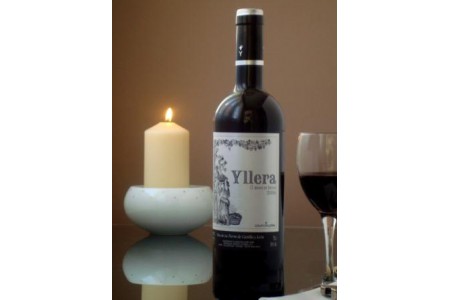
Just time for a stop at Rueda to buy some Yllera wine and then off to Santander and the good ship Pont Aven.
 
 
 June 23rd. 2013


Sunday, 16 June 2013

June 16th. Father's Bad Day (the apostrophe is correctly placed)

June 16th. Father's (bad) Day


It's always a busy time when we start packing for the journey back. For the last 3 days I have been trying to keep my parking space outside our front door so that I can load up all the stuff we take with us; dog, oil, wine, bikes, books, and stuff that Mrs. Sanchez puts in the big case, boxes, bags etc. which she calls 'clothes'. I have been persuaded to leave my warm and waterproof winter coat here. Apparently it is summer in Brum and I won't need it.

Today we went up to look at the olives and to spray Neem on the almonds. This involves a complex combined  operation with H. upstairs who parks his car in my garage. At a given signal H. collects his car and fills the space as I leave, vacating it as I return. This is all done using mobile phones and cars. Parking spaces on our street are few and highly prized. All went swimmingly until we were stopped by the Guardia Civil (see previous blog), also known as the Benemérita, who fined me 200€ on the spot and told me to get a Spanish driving licence (nearly spelt that wrongly again, Paddy).  He was wrong about the licence and the offence that he said I had committed would have been  trivial. Naturally I resisted the temptation to say 'Sin vergüenza ' (see previous blog 14/06/2012) , thanked him very much and drove off in a sulk which is still upon me 6 hours later.


 You may wonder if the olives really needed looking at and if the blackfly on the almonds needed a Neem breakfast and, indeed, if a parking space is that precious.

Our nephew and his beautiful and charming wife are in Alora at the moment. They are staying in my sister's flat and seem to be having a good time despite the hot sunny weather, gallons of wine and delicious food. My sister is not there either as it has only one bedroom.
 Last night we went with them to Álora's new ice cream parlour, Saborea which was very busy. (nephew J. paid for the lot (6) nice chap.) The ice creams are all home made and very tempting. Mrs. Sánchez had 'Cookie' and I had a strawberry cucarrucha (cone). The bars, on the other hand, were mostly empty (Saturday night!) or had shut early.


Mmmm
 
                                       
                         Here's the alcalde , Jose Sanchez, getting a free one


How many ice creams could you buy with 200€?


June 16th. 2013

Wednesday, 5 June 2013

A nice birthday lunch and The Massacre of Málaga

A nice birthday lunch and The Massacre of Málaga


The Entrance to The English Cemetery, Málaga.
 
It was my birthday last week so off we went to Málaga for a slap up celebratory lunch in a posh place by the lighthouse. Very nice too. On the way we called in at the English Cemetery down on the road to Velez Málaga (Avenida de Pries) ; an unusual birthday venue, I admit, but it was nearby , we had an hour to kill (no pun intended) and it's just the place to work up an appetite.
The English Cemetery has been there since 1831 and should really be called 'The Non-Catholic Cemetery' as there are 'heretics' buried there from all over the place, including Germany and Oldham.

There are no burials allowed in the cemetery these days because the city has grown around it and burials there would now break local laws. For a cemetery it is quite a beautiful and interesting place, not least because it contains the graves of Gerald Brenan, his wife Gamel Woolsey and Robert Boyd. I'll be bending your ear in the next blog about Mr. and Mrs. Brenan but as Robert Boyd was very the first resident he deserves a mention.

Back in 1831 any non Catholics who died in Málaga did not rate a 'decent' burial so their bodies  were buried in an upright position at the dead of night in the sand of a nearby beach. This was before the advent of mass tourism and beach volleyball.
If a corpse was not washed out to sea the local dogs would tuck in ; a balanced diet being achieved by the organic rubbish which was dumped in the same place.

 
William Mark


The British Consul,William Mark, regarded this state of affairs 'with great grief and disgust' and 'his blood curdled at the thought that Englishmen should be buried thus'.
Mark wrote to the British Government and  the governor general of Málaga and was eventually granted a piece of land on a hillside on the road to Velez for the burial of British subjects.
It is reported that he waited with eager anticipation for his first client who turned out to be George Stephens, owner of the brig 'Cicero' who fell into Malaga harbour and drowned. There is no evidence that he was pushed and William Mark knew nothing about the accident until the next day. A big crowd attended the burial.
Mark then asked the Earl of Aberdeen for 200 pounds to build a wall to enclose the cemetery which was granted. The builders dug the foundations slightly away from the planned area (typical!!) and so left poor old George Stephens outside the cemetery. The first burial to take place inside the walls was that of Robert Boyd.


                                        Lieutenant Robert Boyd  (1805-1831)


Robert Boyd was an impressionable young Irishman who had followed the exploits of  'mad , bad and dangerous to know' Lord Byron in Greece. Byron had died in 1824 while fighting for Greek Independence from the Turks and was widely aclaimed as a hero.
Boyd was  a soldier with the East India Company. He  resigned his commission and inherited 4000 pounds.  At about  the same time he fell in with a group of London intellectuals and other malcontents who were very angry about the behaviour of King Ferdinand VII of Spain. They had all fallen under the spell of General José María de Torrijos y Uriate, 'a handsome and charming man of noble birth with a lively intellect and impetuous courage' but not much cash who was exiled in London after falling out with the King.
 
 
                           General José María de Torrijos y Uriate (1791-1831)

You can see by the dates of these two chaps that things are not going to turn out well.


Torrijos had a plan to invade Spain to overthrow King Ferdinand but needed money to charter a boat. Boyd was happy to stump up a few thousand and everybody got ready for the adventure.

The British government did not want to upset Spain at this time  so the boat, 'Mary' was seized and embargoed before it left for Gibraltar. Not to be put off, the 50 or so conspirators set off individually for Gib. and met up later. They included Torrijos, Boyd, some ex ministers of Spain, an apothecary, a lawyer, two commercial travellers, two tailors, a monk, a clock-maker and a musician.

After a few months they set off from Gibralter to invade Spain but the Governor of Gibraltar captured them and gave them a severe talking to.

Eventually the rebel forcé of 80 men left Gibraltar and landed  20 miles away at Getares near Algeciras. They marched on Estepona where they were thrashed by Spanish troops and the survivers limped back to Gibraltar. All prisoners were shot in accordance with Spanish law (!?).
By this time the British Authorities were getting fed up with all this and wanted all the conspirators out of Gibraltar as they were putting off tourists and investment bankers.

Torrijos was undeterred and on November 30th. 1831 he set off again with 50 men and a cabin boy,  who knew nothing of the plot, to invade Málaga believing that 2,500 troops of the Málaga garrison were waiting to support him. After sailing for two days they landed at Fuengirola and wandered through the hills just near here until they came to Alhaurín de la Torre, which you can see from our back wall. Here they were welcomed and given food and drink before being arrested on December 3rd. by the Governer of Málaga, Vincente Gonzalez Moreno , later known as 'The Butcher of Málaga'. You can see what's coming next.

Instead of doing the right thing and shooting everybody on the spot, Moreno took the rebels and the cabin boy back to Málaga and had them shot there.

 
The executions of Torrijos, Boyd, the rebels and the little cabin boy.
 December 11th. 1831

Boyd and Torrijos were the last to be shot. When William Mark heard that there was an Englishman among the prisoners he sent off a letter straight away to London asking the British Government to intervene. (the postal service has since deteriorated). Palmerston wrote;

'As to Mr Boyd, ...his death was justifiable according to the laws of nations. Mr Boyd was found in arms acting against Spain, acting against its authorities, in union with persons who were considered traitors to its government.’

The prisoners were taken to St. Andrew's Beach and massacred ; even the little cabin boy who had been taken under the wing of a Carmelite monk and had to be dragged out of his arms by force. The monk was later found to be 'out of his mind'.

Mark went down in his carraige to collect the corpse which was buried within the walls of the English Cemetery.


                                                        Robert Boyd's Grave

The English Cemetery is now run by The English Cemetery in Malaga Foundation, a Spanish charity. The vice president is the charming Mrs. Rosella Parmiter who runs the small shop and visitors' centre there.


She'd love to see you.


June 5th. 2013

Wednesday, 29 May 2013

It's not true about the water in Majorca

It's not true about the wáter in Majorca


We've just returned from a holiday in Mallorca, which is pronounced 'madge orka', believe it or not. I know it sounds a bit naff but in 'mallorquín' that's how you say it. . Mallorca and Majorca are not two different places after all.

Spain has only one official language, 'Castellano' (Castilian) which is the first language of nearly 90% of Spaniards.

There are other co-official languages
Catalán
Valenciano
Euskera (Basque)
Gallego (Galician
which are spoken in schools and colleges in these regions.

Mallorquín is very like catalán,the co-official language of the islands (you can upset people by saying this) and is currently under threat from media broadcasts which are in catalán or castellano.

 
Balearic nationalism
 
 
There are other languages spoken in Spain too.  Aragonese, Asturian and Leonese are 'recognised' but not official.  Andalusian and Canarian are only classed as dialects.
 
In Palma, the capital of the Balearic Islands, everyone seems to speak 'Spanish' (castellano) or English or German,  Away from the capital and the beach resorts nearby you will hear mallorquín being spoken in the shops and between local residents. It sounds a bit like Spanish with a German accent which can be confusing as there are lots of Germans there too. Bar and café signs are often in German or English depending on where you are. Soller (Sodjer?) where we went is a favourite for German tourists and residents but further up the coast in Port Polença 90% of foreigners are Brits.
Mallorca was 'molt bon' (very good) but a bit cold.

It's gone a little chilly here in Álora, too; a cold wind from the north west.
The arctic chill has brought us inside to watch the telly. Britains's Got Talent seems to be very popular seeing as how it's on every night and has displaced Coronation Street., I'll give it a whirl. I'm sure that Britain does have talent so it sounds promising.
Ant and Dec, David Walliams, Simon Callow...what's not to like?

May 30th. 2013.


Saturday, 11 May 2013

Prickly Pears and Mexican Airs

Prickly Pears and Mexican Airs


Two weeks ago Mrs.Sanchez shoulder charged a parked car and broke her collar bone. The car was undamaged but Mrs.S. suffered 'life changing injuries' With her left arm in a sling my life has changed considerably. I never knew how much crockery we had.
For this reason and the beautifully warm and sunny weather, the Man in Alora  blog has failed to appear for a couple of weeks. Sorry.
 
Last Sunday the 20th. annual Festival of Verdiales took place high above Álora at La Ermita de las Tres Cruces  (the Hermitage of the Three Crosses). The festival dates back to 1722. We drove up the tortuous and vertiginous (I've looked it up, Paddy)  track from the Antequera road  to the hermitage and joined the fun.
Verdiales is a form of music and dance which is said to predate flamenco.(1722 definitely predates flamenco). Wikipedia reckons it was invented in Almogía, just over the hill from here, but I suspect the entry was written by an Almogían; with help.
 
 
The instruments used are usually two or three guitars, a violin, a big tambourine, castanets and  small cymbals. Someone sings, someone does some elaborate flag waving and the capitán (leader) waves a colourful bendy stick with streamers to tell the panda (group) when to play, sing and stop. The stop command is needed because none of the tunes appears to have an ending. You can get a flavour from this link.
 It does go on a bit, though and I recommend starting about 23 minutes in when you will see the chap pictured below. I do not know how to get rid of the annoying
little fellow in the bottom right hand corner though.
 
http://www.youtube.com/watch?v=3wAVk0Gg_I8


                                                   Alonzo 'El Chumbo'


El Chumbo (the fruit of the Prickly Pear Cactus. Indian Fig Opuntia (O. ficus-indica).
 
 
Alonzo (El Chumbo) plays guitar and sings in one of Álora's champion Verdiales pandas, 'Raices de Álora' (Roots of Álora).
 
 
He also has a small band which performs folksy music around Andalucía. He is very popular and he talks to me because I am a fan. On Sunday he met me with a 3 litre container of sweet wine and I was obliged to have a swig. It was quite good so I was obliged to have another. The bottle was empty before  Raices de Álora were called to march up to the performance marquee.


El Chumbo and the panda
 
When he is not performing,  Alonzo is painting walls white and I have seen him sweeping roads too. He is supposed to be painting the walls of  J and S who are friends of ours but work has been interrupted by a colony of aggressive bees which live 10 metres up inside the wall of their patio. Alonzo objects to being repeatedly stung as he paints. Nobody has been able to do anything about the bees for several years as they are protected in Spain and the Guardia Civil are likely to lock anyone up who meddles with them. J and S and their dogs get stung if they open their back door or sit on their terrace two floors up. The Ayuntamiento (town council)  will  do  nothing and the wall stays unpainted.
 
 
Speaking of walls, regular readers of Man in Alora will remember the story of the disappearing balcony. (4/4/2013). I am happy to announce that work has now been completed.


Before the collapse
 

                                                                 After
              
 
Now!
 
Believe me this has caused quite a stir. Antonio is very proud of his new balconies which as you can see are a bit thicker. There are doubts about the colour.
 
Last night we went to 'Sabor a Mexico'  (A Taste of Mexico) at Álora's principal theatre, El Teatro Cervantes. All theatres in Spain are called El Teatro Cervantes, but we have a special claim to the title  because  Mr.Cervantes actually  lived here,  just a few houses down from us.
Why do people applaud all the way through a song? Why don't they wait till the end so we can hear it. Can I blame 'Operación Triunfo' for this? And do we all have to stand up at the end to applaud? It wasn't THAT good.
 
Ay ay ay ay
Canta no llores.
 
Cop an earful of this Mexican magic


Today's tip for tourists.
 
 
Be careful if you order 'tea with milk'
 
 
Off to Mallorca on Wednesday. ¡Hasta luego!
 
 
 April 11th. 2013