Wednesday, 4 November 2020

Where did that year go? Man in Álora is.

 Where did that year go? Man in Álora is.


It's good to be back.

Mrs. Sánchez and I finally made it back to Álora four weeks ago and have loved every minute. As we came round the last bend and the magnificent Moorish castle came into sight for the first time since last November, we brushed warm, salty tears from our eyes and I looked forward to my first gambas al pil pil, calamares a la plancha and that gem of the autumnal gastronomie andaluz ... callos.


My last communication as ´'Man not in Álora' mentioned the possibility of a new Spanish State of Emergency  (estado de alarma) being imposed as Covid 19 cases appeared to be ´spiralling out of control´. Well, here it is, and all kinds of obstacles are appearing which are going to make our return to Boris's Bonkers Blighty a bit tricky.

The new 'State of Alarm' gives the Spanish government all kinds of special powers but can only last for 15 days unless it is renewed. These powers can include a toque de queda (curfew), restriction of movement, searches of property and the rationing of papel hygenico (toilet paper). 

There have only ever been three estados de alarma in Spain since the end of the Franco dictatorship (apart from a little hiccup in1981 when there was an attempted military coup d'etat). The first was in December 2010, over Christmas, when the air traffic controllers went on strike. The second was in March this year and lasted until June 21st.

The third state of alarm was imposed on October 7th. 2020. It wasn't as draconian as the March one and initially only applied to the province of Madrid, which upset the Madrileños no end.

'Why just us?' they all shouted.


                                      Angry Madrileños

On October 25th. a national curfew was announced. Everybody in Spain now has to be in their homes by 11.00pm. and not go out until 6.00am. the next morning. This will last until November 9th, the day we leave for the UK!!! Homeless people and key workers are exempted. Also some provinces, towns and villages were told to close their borders, so-called perimetral restrictions, in order to avoid the full lockdown imposed earlier this year, which was very strict. It doesn't seem to be working, so new measures will be considered tomorrow.


The 'new normal' in the Top Square.

After a couple of days unpacking and hacking back the jungle that used to be our back garden we put on our pretty facemasks and headed up into town.

Everybody is wearing a mascarilla - in the street, in cars, out in the campo, in bed - everywhere. The fear of being confined to barracks again and the massive fines for not wearing one seems to have done the trick, and the Perotes have been wearing them during temperatures of more than 40 degrees centigrade. Phew!


                 ¡LA MASCARILLA ES OBLIGATORIA!

The weather here has been warm and sunny most of the time and  the Top Square (la Plaza de la Fuente Arriba) at 11.00am on Friday was as lively as ever. Apart from the mascarillas it appeared to 'business as usual'.

All the shops and bars were open, with restrictions on numbers, distancing and antiseptic gels. It took a few minutes to realise that one of the most endearing of Spanish customs was absent - no physical contact. No kissing on both cheeks, no hugs and no handshakes. The preferred greeting here is either 'elbows' or 'hand on heart'

You don´t have to wear a mask when you are sitting at a table, but a lot of people are getting to like wearing them. I was expecting to see 'piebald' faces when the masks came off. All that sun for months on end and half your face covered... well, stands to reason, but it's not the case.


I think it's a good look.

Our friend Ana Molina invited us round for a meal, which is still legal in Spain. She had a lot to say about 'El lockdown' (same word in Spanish).

The Top Square was deserted for most of the lockdown...apart from a visit from a lone horse that went through town looking in shop windows and a jabalí (wild boar) that tried to get in Bar Cafe Madrugón for a coffee and anis.

                ¡Venga Javi. Póngame un cafelito, coño!

I heard from a usually unreliable scource that over in Mijas, Marbella and Benahavis these hairy porkers have become such a problem in the town and on the roads that the Junta de Andalucía is encouraging people to hunt them with 'arcos y flechas'. (bows and arrows). 'They've bagged 60 so far and the meat has been donated to soup kitchens. Only a small number of residents and holidaymakers have been shot by mistake so far.

This mascarilla malarkey is a bit pesado (annoying) if you wear glasses and don't hear too well. For a start, how can you recognise people to say hello to when half their face is covered and your glasses are steamed up all the time? When you do get it right and it really is someone you know, you can´t tell what they´re saying and they can't hear you either, you can't lipread, and they're talking in Perote Spanish which you haven´t heard or spoken for a year. I can't wait to get back to England where nobody talks to you anyway.

They don't appear to have a test and trace system here. No-one takes your contact details in bars or resaurants. The simplest way to test yourself is to drive down to the Serrana gasolinera on the road to Málaga. If you can't smell the pong coming from the nearby pig farm, you really do have a problem!
 

                               Shut that window!

Our second big job has been to pick the olives at our olivar near Casarabonela, a town with a name that even the locals can't pronounce. We have to pass the Gasolinera Serrana on the way there so we've had a Coronavirus test twice a day for about two weeks.

This year we had a reasonably good crop of olives - small, a bit shrunken after a long dry summer, but lots of them. We just couldn't get enough people to to help us to pick them this year. Our pal and harvest boss, Colin, took a chance and flew down from Liverpool to help and we ended up with 930 kg. of good olives. Thanks also to Jim, Mike, Shirley and Glenys.


                            Colin and Mrs. S. in action.

The olive oil is very good this year. We extracted 167 litres. The olive mill just down the road from Olivar Caicunes is usually buzzing with activity at this time of the year. Farmers come and go all day with their olives and most of them are up for a chat about, well, olives mainly, and they've opened a little cafetería too. This year masks had to be worn in and outside the mill, except in the cafetería if you were sitting at a table. Mrs. S. and I were politely asked to leave the mill as only two people were allowed in and only when their oil is ready to  pour. 

One thing that hadn't changed was the smell. There is nothing quite like the smell of an olive mill in full swing. It's a real spirit lifter.

                             Mrs, S. waiting for the oil.

We usually send some of our olive oil back to Birmingham where we sell it one day a month on Moseley Farmers' Market.

This year we hit a problem when I contacted our usual 'man with a van' to arrange the transport. He said he was unable to oblige this year as he is awaiting trial for, allegedly, trying to smuggle a rather large amount of cannabis into Britain. 

Álora lives for its festivals and special days.This year has seen the cancellation of nearly all of them. Even though only 5 Perotes have died from Covid 19, the residents here have had to live through the strictest lockdown rules in the world and it looks likely that they are set to return very soon.

This year all these have not happened:

Carnaval (Carnival )

Semana Santa (Holy Week)

La Feria (The Annual Fair Week)

La Romería de la Virgen de las Flores (The pilgrimage for Álora's patron.)

El Día de las Sopas Perotas (The celebration of the town's signature dish). 

Even Halloween was a tame affair this year, which was a blessing.

Nothing much happens at Christmas anyway,

El Día de los Muertos (The Day of the Dead) seems to have taken place as normal. This is the day when people go up to the cemetery and put flowers by their relatives' nichos (graves). It's a good day for the florists and taxi drivers and once again Alora's museum put on a special exhibition to celebrate the day.

María José who is the curator of the museum, stopped me in the street to remind me about her 2020 display.


I didn't know what to say.

Now here's a thing.

I have been surprised and puzzled by the number of Brits, who have lived here throughout the Pandemic's 'first wave,' that believe it has all been fake - that people are not dying in large numbers and that it is all some kind of plot or conspiracy.

'It's just like 'flu'

'It's a natural thing, we just have to accept it'

'It's been manufactured by the powers that be.'

'They just want to keep us under control.'

'The hospitals have nothing to do because there are no Covid patients and they've cancelled other operations.'

It's true to say that Álora does feel a safe place to be at the moment. We'll  see.

 Just because it's a conspiracy theory doesn't mean it's not true.

Meanwhile we shall attempt to drive back to England next Monday amid lockdowns and restrictions in Spain and in the UK.

Wish us luck. 

Watch this space.


Juanito Sánchez 4th. November 2020.


Friday, 25 September 2020

Olé. Watch your language. You could get lost in translation.


Just yesterday, Mrs, Sánchez and I took Monty for his morning consitutional though Moseley Bog, an unfortunately named but beautiful wild and wooded wilderness, close to the historical, and also unfortunately named, Sarehole MIll.

Both were popular haunts of J.R.R. Tolkien, mythopoeist, author of The Lord of the Rings, and former Brummie, who spent his childhood just a cock´s stride away from us in Wake Green Road.      

J.R.R. Tolkien

'Yampy Ron' or 'Bab', as he was effectionately named by the local lads, spent all his spare time reading books or wandering round Moseley Bog, making up stories about elves, dwarves and orcs etc. The Bog and Mill haven't changed much since Ronnie's day, but you can now get a nice cream tea and an artisan pizza in the mill yard Wednesday to Sunday (Booking advisable).

                                      Moseley Bog

The Bog is a popular venue for dog walkers, nature lovers, serial killers and Gandalf impersonators (which astonishingly is NOT a crime), so I wasn´t surprised when The Hound of the Baskervilles shot past us in pursuit of little Monty. A strongly accented voice shouted what I took to be, ´¡Pa´Ca!´ (pa ka),which, in Álora means ´Come here!´and  I was immediately whisked back to the village of The Perotes, where we are usually in residence at this time of the year.       

The owners of the dog turned out to be from Salamanca in north west Spain and are on holiday in Birmingham because they are big ´Lord of the Rings' fans. We had a bit of a chat in Spanish and it turned out that the dog's name actually was Paca, short for Francisca. How we all laughed together about my mistake. Spanish people don´t say Ha Ha Ha , like us, they say 'Jajaja!' which sounds just the same. They didn't seem to have heard of the 2 weeks isolation rule either.


 may have to hand in my Man in Álora badge if we can't  get back to Spain soon. Brittany Ferries which operates the MV Pont Aven to Santander and Bilbao has already shut down several routes and cancelled hundreds of sailings, including our return boat in November! They have been hit hard by Britain's quarantine rules and are struggling to survive.

                               The MV Pont Aven

Our sailing for October seems to be still on, so fingers crossed. Monty will be looking forward to 24hrs. banged up in a cage on Deck 10. If he was a cat he'd have to stay in the car. Cats must have very strong bladders. I don´t know what would happen if you wanted to take your pet ferret for a holiday, the third animal that can be transported on a Pet Passport. I suppose you could keep it down your trouser leg like Eddie Grundy.


By the way, if anyone reading this venereal organ is planningto take their pet rabbit abroad by ship, you can think again. Rabbits are banned on all French sailing vessels.

                     Pas de lapins! - ¡Conejos No!

It´s all because of a superstition dating back to the 17th. century when some rabbits, which were being kept on board a ship for food, heroically nibbled their way through the wooden hull and sank the ship. I thought this was maritime myth until I called my old pal Christophe Matthieu the CEO of Brittany Ferries. He confirmed that if a crew member got so much as a whiff of a rabbit, the whole crew would munity. If you don't believe me, ask him.

The Pet Passports will be be invalid when Britain leaves the EU at the end of December. I don't know what we'll do with little Monty then.

'You see that big boat muchachos? That´s the Good Ship Pont Aven bringing Mr. and Mrs. Sánchez back to Spain.'

I must say Mrs. Sánchez and I are really looking forward to being back in Álora after 10 months away, even though we can only stay for 4 weeks this time, unless Pedro Sánchez (no relation) Spain´s Prime Minister delares another Estado de Alarma (State of Emergency) and we are locked down ad infinitum.

My chief Álora correspondent, Good-timin' Simon, tells me that life there has settled into ´the new normal' and everybody is wearing masks around town. That must have been unpleasant in the hot weather. I can't wait to visit the new bars and shops that have opened. Apparently there's a place where you can buy all sorts of British products, right in the centre of town. Much more convenient that having to go all the way to Iceland.                                                                         I'll be stocking up there on Oxo cubes, Ambrosia Creamed Rice, Wotsits and Sunny Delight to bring back to Blighty. That reminds me of another.........

Hero of  Álora. (number 2 in the series)

Corned Beef Keef

I don't know if anyone remembers Corned Beef Keef who lived in Álora about fifteen years ago. He had a house on Calle Carril with a back wall that overlooked the road from the Plaza Baja (Bottom Square) to the station.

Keef was 'a larger than life figure', which means a loud-mouthed pain in the arse. For some reason he always used to shout 'Watford!' at me whenever he saw me. He also used to sell tinned English food to homesick Brits from his back room.  Keef got involved with a bunch of British ne'er-do-wells who had a house in the square at the bottom of Calle Ancha.


La Plaza Baja (
The Bottom Square) looking towards Calle Carril and Calle Toro.

The story I heard was that he'd come to Álora to reclaim his wife who had 'taken up' with a local artist. They all used to hang out at the aforementioned antro de perdición (den of iniquity). A lot of drink and drugs were being necked and nosed down there in those days. One morning, as I was passing through the bottom square, I noticed a very large, very rude word daubed in red paint across the front of the house which I took to be a reference to his ex-wife. That went down well with the neighbours, I can tell you, even though I doubt that any of the vecinos had seen the word before.

Soon after, Keef's 12 ft. (3.65 metre) back wall collapsed into Calle Toro, which leads down to the Estación de Álora, completely blocking it. Months went by while Keef ranted about the 'f-ing council' being responsible for clearing it up and with neither Keef nor the 'f-ing ayuntamiento' doing anything to clear the road. Very inconvenient for everyone

One night someone fell out of a first floor window of the 'painted' house and was badly injured. This was followed by a fire which burnt out the front bedroom. The occupants were deported and Keef went back to England without his wife and hanged himself.

Oh! Those were the days!

Channel 4 has finally screened the episode of 'A Place In the Sun' that was filmed in Álora 18 months ago and featured an interesting, but sadly brief, interview with Yo mismo. The fee had not arrived when we left Álora in November, but I expect it will be waiting behind the door for me when we get back.

Watch Your Language! It could get lost in translation.

                         David Simon and Pablo Iglesias

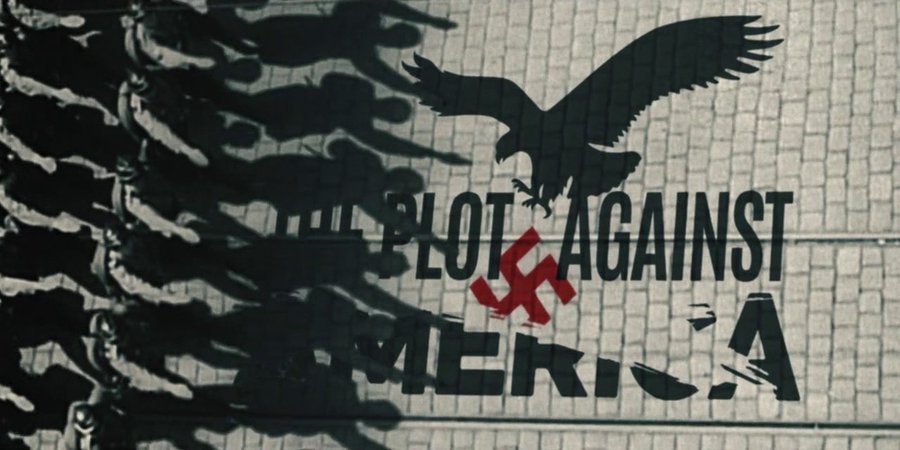
There was a big fuss on Twitter in August when a Deputy Prime Minister of Spain, Pablo Iglesias congratulated David Simon, creator of The Wire on his film, 'The Plot Against  America', based on a Philip Roth novel about a Fascist take-over of America.

It all happened in the world of 'Twitter', when Pablo, socialist leader of the Unidos Podemos party tweeted: 

Vista “La conjura contra América”. @AoDespair y Ed Burns nunca decepcionan pero el momento en el que ha aparecido la serie le da un significado especial. A veces nos parece inconcebible el éxito del fascismo y, sin embargo, los colaboracionistas están siempre muy cerca.
Image

Image

(I just finished watching The Plot Against America. David Simon and Ed Burns never disappoint but the moment in which the series has come out gives it special meaning. Sometimes, the success of fascism seems inconceivable to us, and yet sympathizers are always close.” )

David Simons checked his phone the next morning and found that he had been mentioned on hundreds of replies to Iglesias's tweet. He must have got out of bed on the wrong side that morning, as we used to say, because he retweeted the comment and added:

“So, if my poor Spanish holds, this fellow liked the bent of a mini-series and tagged me. And so now into a second day, my Twitter feed is full of Francoists and Catalunyans screaming at each other in languages not my own. Well okay. It’s 1937 again. Fuck the fascists. No pasaran [sic]” – a reference to the anti-fascist slogan “They shall not pass.”

If some people could just resist the temptation to put their fingers to work on Twitter, the world would be a much calmer place. That´s my opinion anyway. David Simon couldn´t resist, though. He became embroiled in a slanging match in Spanish with Francoists, Fascists,communists, socialists, you name it. He even had a go at the USA. His knowledge of coloquial Spanish let him down when a supporter texted, 'Olé tus cojones' which translates as 'I smelt your balls.'  Taking it as an insult he replied, 'Tu madre', (Your mother) which really IS an insult. Imagine what a prat he felt when someone told him that Olé isn't just the first person singular form of the preterito of the the verb to smell (You knew that, didn't you?) but means ´Bravo!' or 'Fantastic', or ´'You've really got balls!' Here's Pablo's dad, Julio Iglesias showing us how it's done.(I think the words at the top are a bit suspect too)


 “Okay, so I’ve wasted the entire morning insulting the mothers and rhetorical paucity of Spanish fascists and Francoists on Twitter. But I have learned that ‘smell your balls’ is actually a compliment. So it’s a bit of a break-even.”

David Simon

Pie News 

Pie-lovers may have noticed the absence of this popular section. I do apologise. I can report that the Cornish Pasties (a close cousin of the pie) in the Isles of Scilly are still top class. I managed at least one a day. The Isles were still Covid 19-free when we left, which seemed to confirm the old Cornish saying, 'A pasty a day keeps a virus at bay'. I'm sad to report that the first confirmed case there was announced this morning. 

On a happier note, although Mrs Sánchez and I haven't been going out much recently I have discovered a top notch pastry treat.

                   The Charlie Bigham full pastry pie

Regular readers and pie-fanciers will know that there are pies....and mis-named pastry pretenders that may be scrummy in their own right but are not proper pies. (I know I'm very close to boring you, or making your mouth water, here).

A good Cornish Pasty can score 100% for taste, texture and practicality and is one of my favourites, but it's not a pie, and does not pretend to be - unlike the Spanish empanada which is a pasty masquerading as a pie. Likewise, many items served in restaurants and pubs as pies turn out to be a 'filling' in a pot bowl with a pastry topping. Pie experts call this a 'top crust'.


 Not a proper pie.


A real pie consists of a filling entirely enclosed in pastry, regardless of the filling or type of pastry - puff, shortcrust or hot water pastry.

Charlie Bigham has been producing high quality ready to cook meals for several years His pies are delicious but until recently they have been 'top crust'. In 2019 he announced:

“Pies are a national treasure, which is why we want to give diners the option of choosing between flaky lid pies and proper full pastry pies.” “At this time of the year, they’re truly the perfect mouthful of food – buttery pastry blended with tender meat, flavoursome vegetables and a rich stock or sauce.”

There are four meat varieties. The one above is a Roast Chicken, Ham Hock and Leek Pie. No vegetarian ones yet.

The trouble is that they are very overpriced at £4.50. I get mine from Waitrose, where, with a little planning, you can bag one at a reduced price.


Result!

I've always looked forward to reading comments from my readers, if you will excuse the familiarity, even if it was just to correct my spelling or grammar. The updated version of Google Blogspot doesn't allow this, so that's that.

 ¡Hasta pronto!

Juanito Sánchez

 24th. September 2020


Saturday, 15 August 2020

Heroes of Álora. Paco Mañoño.

Paco Mañoño


The first thing to say about Paco Mañoño (Man-yon-yo) is that 'Paco Mañoño' was not his name. He was known by everyone as just 'Mañoño', but so were his brothers, his uncles and grandfather too. It's a family 'apodo' (nickname) and lots of families in Álora have them. Nobody can remember why Paco's family were given this one, it's not offensive at all and most people are proud of their family apodo. I had to make up the spelling because I've never seen it written until I just wrote it. I doubt if anyone has seen it written.. Paco Mañoño had more than his fair share of apodos because 'Paco' is an apodo too!

Paco showed me his DNI (ID) card once during a heated, if perplexing, discussion about his age. The picture was him all right, same very serious face, but his nombre de pila (Christian name) was given as  'Francisco' and neither of his two apellidos (surnames) was Mañoño. I didn't believe his date of birth either - Paco had lived a hard life, though. I lost the bet about his age.

'Paco' and 'Curro' are short for Francisco (nobody knows why), in the same way that Pepe is short for José,  Lalo is short for Eduardo and Maripepa is short for Maria José. It must have been great fun making all these apodos up.

Some Franciscos don't like being called Paco at all, and prefer Franci (Fransie) which sounds a bit posher, and a bit gay, in my opinion.

Generalisimo Francisco Franco Bahamonde, Dictator of Spain from 1939 to 1975 was sometimes  referred to as Paco or even Paquiito (little Paco), but not to his face and only by people who were tired of living.


                      'Don't call me Paco, please,sir. My name's really Francisco'.

Paco Mañoño was one of 5 Mañoño brothers. I only ever met three of them ; Paco, Juan and Rafael. They lived in a house in  Alora's most picturesque street, Calle Negrillos, just off  La Plaza de la Fuente Arriba (the Top Square), with their mother until she died about ten years ago. 

                                                             Calle Negrillos

Although  Paco, Rafael and Juan shared a common interest, alcohol, you never saw them together. Raphael didn't go out much anyway, but the other two could be seen most days around the Top Square having risen early that morning to grab all the smartest clothes.

Paco would usually stride through the town from end to end and back again, bent forward, with his hands clasped behind his back, looking serious. Juan busied himself arranging chairs outside the bars and collecting a few empty glasses.  I don't know if anyone ever paid him. Paco had a proper job in Marbella until the 'crisis' of 2008 and so had enough money to drink in the bars around the Square that still allowed him in. It's hard to imagine it now, but none of the bars in La Plaza de la Fuente Arriba had tables outside until quite recently. Smokers and non-smokers mingled happily together inside the bars in all weathers or spilled out onto the square. Spitting out sunflower husks was compulsory, ashtrays were rare and all litter was dropped on the floor to be swept up by the camarero (waiter/barman) later on. Ah! The good old days.

The recession and the death of their mother set the Mañoños further down the downward slope. At about this time Paco and Juan could often be spotted passing through the square sporting a variety of injuries - black eyes, broken bones, bandaged heads etc. We suspected domestic violence, but it turned out these were self-inflicted wounds.


                                       Juan Mañoño (with wounds


One of the natural enemies of the dedicated drinker in all cultures is gravity, and falling over is an occupational hazard, particularly at night. In Álora it usually involves landing on a hard surface.There's no shortage of those in Álora, indoors or out, and there are few, if any, stair carpets. The Mañoños had an abono de temporada (season ticket) for 112  (the emergency ambulance service). The paramedics had their address in 'my destinations' on their TomTom and allowed the brothers a small discount if they injured themselves away from home. Calle Negrillos is a steep, stepped street. (another potential death trap for the careless inebriate and someone with a lisp), so recovering an unconscious injured person from down there can be tricky.

Mrs. Sánchez and I first met Paco Mañoño in La Taberna de Antonio on Calle  La Rampa back in 2001. In those days 'Antonio's was popular with members of the Real, Sacramental y Ilustre Hermandad y Cofradía de Nazarenos de María Santísima de los Dolores Coronada y Soledad, better known to us as 'The Dolores Crowd', a local religious club dedicated to the most important statue of the Virgin Mary in the town. Paco loved The Virgin of Dolores more than anything in the world, even Cruzcampo.

                        Dolores Coronada coming down our street.

We used to spend a lot of time in Antonio's in those days - well, almost every night to be honest.  Ana Molina (Mrs. Antonio), who did all the cooking for the restaurant, befriended us on the first day we showed up in Álora. and from then on she was reponsible for our social lives for the next ten years.

 La Taberna de Antonio (Ana on the left, Antonio on the right)  
 
Ana kicked off by re-christening us 'Juan' y 'Mowri', got us to write something in her visitors' book and cooked us a few platos tipicos del pueblo which were delicious.She spoke no English, insisting that we were going learn Spanish 'rapido'. Her method was to refuse to listen unless we tried to speak Spanish, and then criticise our efforts.
 
It was some time before we realised that, although everyone in Álora can understand Castellano, which is the official Spanish language that we were trying to learn, none of them speaks it. And nobody didn't speak it as convincingly as Paco Mañoño.
 
Antonio's bar/restaurant was open during the day but didn't start to get busy at night until just before midnight.
Ana introduced us to everyone that came through the door and they immediately became our best mates, all speaking 'Perote' which is a form of Castellano which you have to speak very quickly, taking care not to pronounce the consonants 's' 'd' 'r' 't' and others, probably.
Once we realised what the score was, we learnt it in no time and tried it out with Ana and Antonio's late night clientele, who consisted mainly of The Dolores Crowd.  It helps if you can speak in a growly voice, too. The best thing about trying to speak 'Spanish' in Álora is that all the Perotes (locals) love you for it, even if you're talking complete gibberish. It's the thought that counts.
 
After a couple of years we'd made quite good progress so much so that, with a lot of guesswork, gestures and 'Mas despacio por favor' s ( 'A little slower, please'.) we could make out what a few  people were trying to tell us.
Paco Mañoño took a liking to us from the start, especially to Mrs. Sánchez. He was a very friendly chap and never noticed that we weren't understanding a single word, even when he was sober. He was always pleased to see us. Almost everything he said was spoken with passion, (a very 'flamenco' way of talking very popular in Álora) and he must have been smoking 50 Ducados a day to maintain that growly voice.
Finally, one night, after yet  another embarrassingly futile session of smiling and head nodding with Paco's arm round my shoulder, I collared Antonio at the end of the bar, which is where he sat most of the night.

'¿Qué me dice Paco? No entiendo ni una palabra.?
 
 ('What's Paco saying ? I can't undersand a word?').

'No te precupes, Juan, ni yo tampoco.'

('Don't worry, Juan, I can't either')  

We became so pally with the Dolores Crowd that we half expected to be invited to join the club. We were invited to many of their 'do's', which always involved food and drink. I was once asked to photograph the investiture of their  new Hermana Mayor, Ana Molina's cousin, also called Ana Molina.  It was a long time before we realised that all these do's were  ´fund-raisers' for the big event of the year, Semana Santa, when Dolores, the star of the Easter processions, has to look in tip-tippety-top condition, out-flowering and out-candle-ing all the other virgins and most importantly, Jesus de las Torres, her main rival and partner in La Despedía show on Viernes Santo (Good Friday).


 El Señor Jesús de las Torres and his mum, La Virgen de Dolores Coronada, say their goodbyes (despedía) in La Plaza de la Despedía (the Bottom Square) before he is whisked away up the very steep Calle Ancha by some strapping young soldiers  to the castillo (castle) where he will meet his fate.


Paco Mañoño was always ready to help out with any work that the Dolores Crowd needed doing. Despite his  wayward ways he was liked and respected within the Hermandad and took part in the processions. In the picture at the top he is wearing the black cassock and badge  of the Dolores Hermadad. Even though Cruzcampo cerveza (or San Miguel or Alhambra) was his second passion he would not normally be seen drinking on parade. On this rainy Viernes Santo the procession had halted in the top square for a decision to be made about whether to call it a day or carry on and risk getting Dolores wet. As luck would have it they put The Virgin down on her special stand right outside Café/Bar Madrugón. Miraculously a large glass of Cruzcampo appeared in Paco's hand. Eventually the hermanos and hermanas decided to carry on with the procession, amid loud cheering from the well-oiled devotees and spectators.

Every year, but not this year, after the Despedía performance has finished, the entire Dolores Crowd, the forty or so soldiers plus other hangers-on head  up to Los Conejitos restaurant for a slap-up lunch. The still hungry and thirsty crowds head up Calle Atras for the busy bars in the Top Square to  make way for a gang of council workers to begin the work of clearing  the bottom square, which is usually knee-deep in empty beer cans, paper plates, plastic tumblers and sunflower seed husks.

I strolled down there one year to take some artistic shots of the rubbish and came across  Paco Mañoño sitting on the  steps of the Parroquía, still in his cassock, smoking a cigarette. He looked only a little worse for wear, but I'd presumed he would be up at Los Conejitos with rest of the Dolores Crowd. Apparently you have to pay for the meal. It was always hard to judge Paco's mood -  he always looked a bit melancholy. Perhaps it didn't bother him, but he deserved better than that.

                                                       La Virgen de las Flores.

 Every hot September, but not this year Álora celebrates another important virgin, La Virgen de las Flores (The Virgin of the Flowers). After nine days of misas (masses) leading up to The Day of the Virgin (September 9th.) Alora's  'romería' takes place. 

On the first Sunday following September 9th. La Virgen de las Flores sets off, on her throne, from La Plaza Baja de la Despedía (AKA. The bottom Square) and up the steep Calle Atrás, pulled by two prodded  cows . In the Top Square she meets a  procession of decorated carts, tractors, lorries and horsesmen,with their riders and señoritas in traditional costumes, all well provisioned with food and drink (ice-cold beer or ice-cold dry Manzanilla 'sherry').They all follow her up the old Ardales road to El Convento Las Flores where a few thousand revellers have already started a big party in her honour.


It's a big day and lots of fun. It's also a big day for the Dolores Hermandad (Brotherhood) which sets up a long bar and a massive toldo (a canopy for shade- it's usually baking hot) called El Capirote which supplies food and drink, at a price. It's their biggest fund-raising event of the year.

                                             El Capirote (view from the bar)

The 'toldo' is erected the day before (Saturday). Early on one of these Saturday's I got a phone call from Ana Molina.

'Juan?  ¿Qué haces hoy?  hace falta gente para montar el toldo.'

They were asking me to help to put up the toldo. The temperature outside was already well into the 30s. Ana did not, and still does not, take 'No' for an answer. I didn't even try.

Mrs. Sánchez drove me up to the Convento where ten or so men from the Dolores Crowd were already assembling the big steel frame for the toldo. Paco Mañoño was there, of course.

'Pick me up at about one o´clock. ' This looked like hot work, and it was.

Paco was surprisingly strong for his slight build and he worked like a Trojan, shouting orders to the young hermanos (brothers - not Paco's, of course)  Everyone was sweating cobs (as we say) as a  few of the old hands climbed up big ladders to pull the toldo across the frame. It was past midday and I kept checking the gate to see if my rescue party had arrived..

Instead of Mrs Sanchez, a van pulled up and more hermanos started to set up the bar. Within minutes they were testing the beer.  It was already cool enough to drink! 

¡Qué sorpresa tan agradable! (What a pleasant surprise!.) It was no surprise to Paco. He was very thirsty and ready to go.The toldo was fixed firmly to the frame - it gets windy up at the convent - and we all headed for the beer.

That's when Mrs. Sánchez appeared. Much amusement all round as we drove away.

¡Hasta mañaña!  (See you tomorrow!).

The next day was el septimo cielo (seventh heaven) for Paco. As a reward for working on the toldo, I imagine, he was allowed to work behind the bar serving food and drink. It combined both his aficiones (loves) - working for La Virgen.... and beer!

We arrived at el Convento the next day at about 2 o´clock. The party was in full swing and the sun was very hot. El Capirote was heaving. You have to buy tickets and then pay for your drinks and food with the tickets, just like we used to do at school bazaars. It's a bit of a fag and eventually tends to lapse into a mixture of cash, tickets, who you know, and lots of pushing.

Paco was very busy, didn't recognise us, and was no help at all in getting my order (cuatro cervezas). I suspected that he'd been sampling the goods a fair bit as well. It's hot work, after all.  We were told later in the week that he'd collapsed from the heat, etc. and was carted off in an ambulance, with a contented smile on his face, by his old pals the paramedics. That was the last time he was 'called to the bar' by the Hermandad.

Rafael was the first of the brothers to die. Mrs. Sánchez and I usually go back to our summer residence in England for three months in June, and when we return it can be some days or weeks before we realise that someone isn't around any more. 

The other two carried on their lives in much the same way for a few years, but Paco seemed to spend most of the day standing by the traffic lights gazing down Calle Carmona as if he was waiting for someone.. He often showed no sign of recognising me and if he did talk to me, he'd lost his spark.

All three are gone now. So is La Taberna de Antonio and Antonio himself. 

Álora is changing all the time. Fortunately the pueblo hasn't suffered too badly from the Coronavirus pandemic - so far at least.  We haven't been back since February and don't expect to return until October. 

¡Hasta la próxima vez, Álora!

Juanito Sánchez August 15th 2020.